Alpine Lake Colorado Fishing: Access, Rules & Trip Tips
Colorado alpine lake fishing is not one single lake or one simple rule. Some high lakes are stocked, some are wild, some are fishless, and some require a serious hike before you ever make a cast.
This guide shows the practical workflow: use the CPW Fishing Atlas, check license and stocking details, confirm trail access, watch weather, and protect fragile high-country shorelines.
Last reviewed: June 25, 2026. Always verify the exact lake, trailhead, weather, license rules, special regulations and closures before hiking in.
Quick Answer: How Do You Plan an Alpine Lake Fishing Trip in Colorado?
Do not start with a random photo or old fishing report. Start with CPW’s Fishing Atlas, then check license rules, stocked-water information, special regulations, trail access and weather.
This page treats “alpine lake Colorado fishing” as a high-country planning topic. If you mean one specific lake named Alpine Lake, confirm the county or nearest trailhead before relying on any rule.
Atlas first
Use CPW Fishing Atlas to check lake location, species, stocked-water notes, access and special regulation context.
License second
Most anglers age 16 or older need a valid Colorado fishing license before fishing public alpine lakes.
Weather third
High lakes can turn dangerous fast with lightning, hail, wind, snowfields, cold water and no cell service.
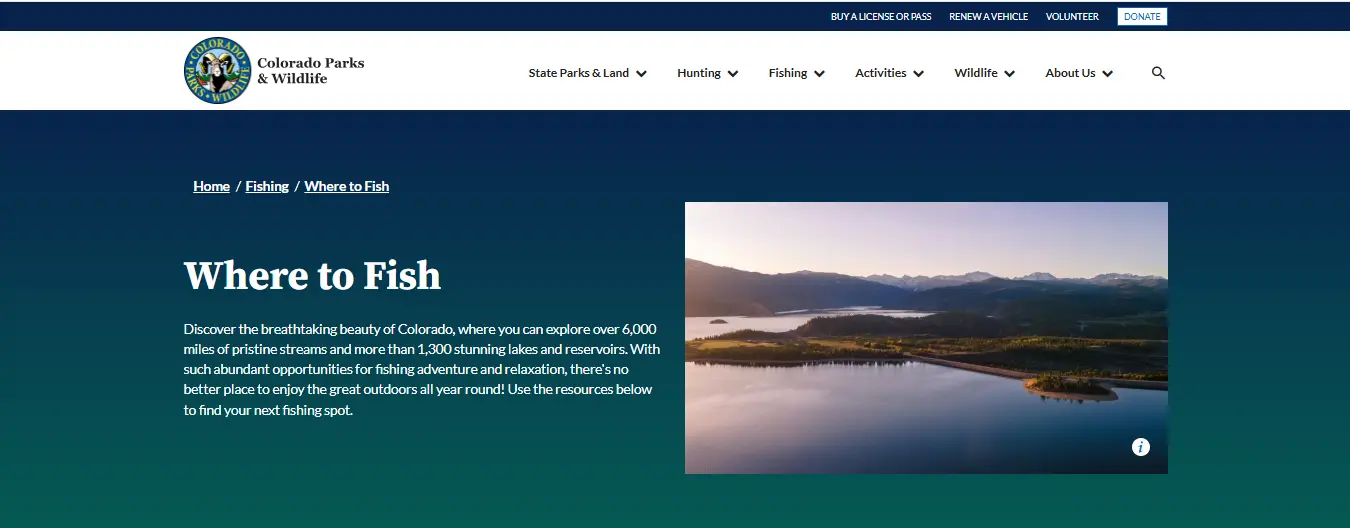
Official Screenshot: CPW Fishing Atlas for Alpine Lake Access
This screenshot is placed near the start so readers can recognize the official CPW Fishing Atlas before searching for an alpine lake.
Watch First: CPW Alpine Lake Fish Stocking Video
This CPW video helps visitors understand how some remote Colorado mountain lakes are stocked from the air. Use it for visual context, then use CPW pages for the current legal and trip-planning details.
CPW Fishing Atlas Workflow for Alpine Lakes
CPW’s Fishing Atlas is the best official starting point because alpine lake names can repeat, old blog posts can be outdated, and not every high mountain lake supports fish.
Search the exact lake name
Use the nearest town, drainage, county or trailhead if the lake name is common. Avoid relying on one name alone.
Check access and map location
Look for mapped water, public access context, nearby roads, trailheads and whether the route crosses private or restricted land.
Check species and stocked-water notes
Look for cutthroat, brook, rainbow or other listed species. If no species appears, the lake may not be a reliable fishing destination.
Check special regulations
Some waters can have bait restrictions, catch-and-release rules, native trout protections or local closures.
Check connected tools
Use CPW’s stocking report, fishery survey summaries and fishing brochure when the Atlas points to more detail.
Start with the official CPW Where to Fish / Fishing Atlas page.
Alpine Lake Fishing Rules: What Applies Before You Cast?
High-country fishing still follows Colorado fishing rules. Elevation, remoteness and a long hike do not remove license requirements, bag limits, possession limits or water-specific restrictions.
| Rule Area | What to Check | Practical Move |
|---|---|---|
| License | Most anglers age 16 or older need a Colorado fishing license. | Buy before the hike and save proof offline. |
| Youth anglers | Youth age 15 and under can fish free, but limits and rules still apply. | Teach kids catch handling and legal limits before the hike. |
| Special regulations | Some lakes may have gear, bait, harvest or native trout rules. | Check CPW Fishing Atlas and the current fishing brochure for the exact lake. |
| Private or restricted access | A license does not allow crossing private land or closed areas. | Use legal trailheads, public land maps and posted signs. |
| Wilderness rules | Some lakes are inside wilderness or sensitive alpine areas. | Check group size, camping, fire, dog, drone and permit rules with the land manager. |
| Native trout | Some alpine waters support cutthroat or conservation-focused fisheries. | Handle fish wet-handed, minimize air exposure and release carefully when needed. |
Verify current rules through CPW Fishing, CPW Rules and Regulations and the CPW Fishing Atlas.
Stocked Alpine Lakes: How to Check Without Guessing
Some Colorado high lakes are stocked by CPW, including remote lakes that may receive small trout by airplane. But a stocking video or old report does not prove your chosen lake has catchable fish today.
| Tool | What It Helps With | How to Use It |
|---|---|---|
| CPW Fish Stocking Report | Recently stocked catchable trout around 10 inches. | Search the lake name and check the report date carefully. |
| CPW Fishing Atlas | Stocked waters, fish species, access and special regulations. | Use the map link to confirm you are viewing the correct lake. |
| Fishery Survey Summaries | Population trends and management context for selected waters. | Use survey notes when available, especially for bigger or popular lakes. |
| Local ranger or land manager | Trailhead, access, snow, camping and route status. | Confirm road/trail conditions before a long drive or backpacking trip. |
Stocking Report Reality Check
- The report helps identify recently stocked catchable trout, but not every alpine lake is stocked every season.
- The date shown in a report can reflect when the water was added to the report, not always the exact stocking moment.
- Air-stocked alpine fish may be small and need time to grow into catchable size.
- Winterkill, drought, shallow water and access limits can change the fishery.
Use the official CPW Fish Stocking Report.
Alpine Lake Access: Trailheads, Roads, Private Land & Maps
The biggest alpine lake mistake is assuming the lake is easy to reach because it appears close on a map. High-country access can involve rough roads, snowfields, wilderness rules, private parcels and long hikes at elevation.
Trailhead check
Confirm the real trailhead, road condition, parking rules, permits and distance before leaving home.
Offline map
Download offline maps, route, CPW page, fishing license proof and weather before entering weak-service areas.
Private land
A fishing license does not let you cross private land, closed roads, ski-area property or posted areas.
Access Planning Table
| Access Question | Why It Matters | Best Action |
|---|---|---|
| Can my vehicle reach the trailhead? | Many high-country roads are rough, seasonal or snow-blocked. | Check county road status, forest road notes and recent trail reports. |
| Is the lake on public land? | Some routes cross private land even when the lake looks public. | Use official maps and avoid trespass shortcuts. |
| Is there a wilderness or permit rule? | Group size, dogs, camping, fires and drones can be restricted. | Check the responsible Forest Service, park, county or land manager page. |
| Is the hike realistic at altitude? | Thin air, storms and distance can make a short map route feel hard. | Start early, carry layers and turn around before weather traps you. |
| Can I fish the shoreline safely? | Talus, marshy edges, snowfields and steep drop-offs can limit access. | Use stable shoreline and avoid trampling fragile vegetation. |
What Fish Can You Expect in Colorado Alpine Lakes?
Colorado alpine lakes vary widely. Some hold cutthroat trout, brook trout, rainbow trout or mixed trout populations. Others may have no fish at all because of winterkill, shallow water, lack of stocking or conservation decisions.
| Fish / Situation | What It Means | Trip Tip |
|---|---|---|
| Cutthroat trout | Common high-country target and often tied to native trout conservation. | Handle carefully, wet hands first and release quickly when required or preferred. |
| Brook trout | Can be present in some high lakes and small mountain waters. | Check limits because management goals vary by water. |
| Rainbow trout | May be stocked or found in some alpine and subalpine waters. | Use CPW stocking report and Atlas to confirm before hiking. |
| Fishless lake | Some alpine lakes naturally or intentionally do not support fish. | Do not assume a blue lake on a map is a fishing destination. |
| Winterkill-prone lake | Shallow high lakes can lose fish after harsh winters. | Check recent reports and consider a backup lake. |
Simple Alpine Lake Tackle & Gear Checklist
Alpine lake fishing works best when your setup is light, legal and easy to carry. Overpacking makes the hike harder; underpacking can make the weather dangerous.
Light fishing setup
Small spoons, spinners, simple flies, compact fly rod or light spinning rod can cover many alpine situations.
Weather layers
Bring rain shell, warm layer, hat and sun protection. High lake weather can flip quickly.
Navigation
Carry offline maps, battery backup, headlamp and route notes. Do not depend on cell service.
Water and food
Carry water, filter or treatment, calories and electrolytes for altitude and longer hikes.
Pack-out kit
Bring a small bag for line, wrappers, clipped tippet, broken hooks and snack trash.
Clean gear
Clean, drain and dry waders, boots, nets and float tubes before moving between waters.
High-Elevation Safety: Storms, Altitude, Cold Water & No Service
Many alpine lake fishing mistakes are safety mistakes, not fishing mistakes. The fish may be active right before weather gets dangerous, so build your trip around a safe exit window.
| Risk | Why It Matters | Smart Move |
|---|---|---|
| Lightning | High lakes can be exposed, especially above treeline. | Start early and leave before afternoon storms build. |
| Altitude | Thin air can make hikes harder and dehydration faster. | Slow down, drink water and avoid pushing beyond your condition. |
| Cold water | Alpine lakes can be dangerously cold even in summer. | Avoid risky wading, swimming or float-tube use without proper gear. |
| Snowfields | Snow can hide holes, wet rock and unstable edges. | Do not cross steep snow without the right skill and gear. |
| No cell service | Emergency calls and map updates may fail. | Leave a trip plan and carry offline navigation. |
| Fragile shoreline | Alpine plants recover slowly from trampling. | Walk on durable surfaces and avoid muddy meadow edges. |
Colorado Fishing License Help for Alpine Lakes
Most anglers age 16 or older need a valid Colorado fishing license before fishing public alpine lakes. Annual Colorado fishing licenses are valid from March 1 through March 31 of the following year.
Need the full license workflow?
Use the complete guide for CPW Shop steps, fees, proof, Habitat Stamp, youth rules, second-rod stamp and common buyer mistakes.
Want a large mountain-lake backup?
If the high-country trail is stormy, snowy or too long, Lake Granby is a bigger drive-up mountain reservoir with CPW rules and access planning.
Prefer a nearby flow-based option?
If lightning or snow makes alpine lakes unsafe, a river report can help you choose a lower-elevation backup.
Private-lake contrast
Wellington Lake is useful as a contrast because it has private-lake rules and a no-license note, unlike most public alpine waters.
Alpine Lake Problem Solver: What to Do When the Trip Gets Complicated
Use this table when something looks wrong before the hike or at the trailhead.
| Problem | Do This First | Do Not Do This |
|---|---|---|
| Lake does not show in CPW Atlas | Search by nearby trailhead, drainage or county and check other official sources. | Do not assume the lake is stocked or legal just because someone posted a photo. |
| Storms are forecast | Start earlier, choose a lower lake or cancel. | Do not push above treeline with lightning building. |
| Road is blocked by snow | Switch to a reachable lake or lower-elevation water. | Do not drive around gates, across tundra or into closed areas. |
| You forgot license proof | Recover or save CPW proof before fishing. | Do not hike in and hope weak cell service works later. |
| Lake appears fishless | Enjoy the scenery or hike to a verified backup water. | Do not stock fish yourself or move fish between waters. |
| Shoreline is fragile or muddy | Fish from durable rock or established surfaces. | Do not trample alpine vegetation for casting space. |
Common Alpine Lake Fishing Mistakes to Avoid
- Assuming every alpine lake has fish: some are fishless, shallow, winterkill-prone or not stocked.
- Skipping the CPW Atlas: the Atlas helps confirm access, species, stocked waters and special regulations.
- Forgetting the license: most anglers age 16+ need a valid Colorado fishing license on public waters.
- Starting too late: afternoon lightning is one of the biggest high-country trip risks.
- Depending on cell service: save maps, license proof, weather and official pages offline.
- Crossing private land: a fishing license does not create access.
- Trampling shoreline plants: alpine vegetation is fragile and slow to recover.
- Leaving fishing line: clipped line and hooks are dangerous to wildlife.
- Using old stocking info: stocking patterns and fish survival can change by year.
- Fishing through bad weather: leave exposed water before thunder and lightning arrive.
Official Links for Final Verification
Use these official resources before choosing a lake, buying a license, hiking, fishing or keeping fish.
Use for the Fishing Atlas, stocked waters, access, boat ramps, special regulations, stream gages and map-based planning.
Use to check recently stocked catchable trout and linked Atlas records when available.
Use for Colorado fishing overview, license context, youth rules and statewide fishing resources.
Use to reach the current fishing brochure and legal rule resources before fishing or keeping fish.
Use to buy the correct Colorado fishing license, stamp or pass before fishing.
Use for helpful background on aerial stocking of high mountain lakes. Use CPW rules pages for legal requirements.
Alpine Lake Colorado Fishing FAQs
Do I need a Colorado fishing license for alpine lakes?
Most anglers age 16 or older need a valid Colorado fishing license to fish public alpine lakes in Colorado. Youth age 15 and under can fish free, but rules still apply.
How do I know if an alpine lake has fish?
Start with the CPW Fishing Atlas, then check the CPW Fish Stocking Report and any fishery survey notes available for the lake.
Are all Colorado alpine lakes stocked?
No. Some lakes are stocked, some have wild fish, and some are fishless because of habitat, winterkill, shallow water or management goals.
What fish are common in Colorado alpine lakes?
Depending on the lake, anglers may find cutthroat trout, brook trout, rainbow trout or other trout species. Always verify the exact lake first.
What is the best official tool for alpine lake access?
CPW’s Fishing Atlas is the best starting point for fishing access, stocked waters, species notes, special regulations and map-based planning.
Can I keep trout from an alpine lake?
Maybe, but never assume. Check the current CPW Fishing Atlas, fishing brochure and water-specific regulations before keeping fish.
When is the best time to fish alpine lakes?
Summer and early fall are common high-country windows, but snow, ice, road access and storms vary by elevation and year.
What safety issue matters most at alpine lakes?
Lightning is one of the biggest risks. Start early and leave exposed lakes before afternoon storms build.
Should I trust old fishing reports for alpine lakes?
Use old reports only as background. Verify current access, stocking, regulations, weather and trail conditions before your trip.
Is this page about one specific lake named Alpine Lake?
No. This guide covers the broader search intent for Colorado alpine lake fishing. If you mean a specific Alpine Lake, confirm the county or trailhead before applying any rule.
Independent Guide Disclaimer
This guide helps anglers plan Colorado alpine lake fishing trips, but it is not an official Colorado Parks and Wildlife, U.S. Forest Service, National Park Service, county, city or land-manager page.