Taylor River Colorado Fishing Report: Flows, Trout & Access
The Taylor River can fish like a dream or punish poor planning fast. The difference is usually flows, dam releases, access choice, and knowing the special CPW rules before you step in.
This guide gives you a practical Taylor River report workflow: which USGS gage to check, how to read the flow trend, where CPW rules change, and how to plan tailwater, SWA and upper-river access.
Last reviewed: June 23, 2026. Always verify live USGS flow, CPW rules, Taylor River SWA access, weather, dam releases, closures and private-property boundaries before fishing.
Quick Answer: How Should You Check the Taylor River Fishing Report?
Start with USGS flow first, then CPW rules, then access. For tailwater fishing, check the Taylor River Below Taylor Park Reservoir gage. For lower river planning near Almont, check the Taylor River at Almont gage.
Do not use one flow number for the whole river. Dam-release water, canyon water, Taylor River SWA and lower river sections can fish differently on the same day.
Tailwater gage
Use USGS 09109000 below Taylor Park Reservoir for the dam-release/tailwater section.
Almont gage
Use USGS 09110000 at Almont for lower Taylor trend, water temperature, discharge and gage-height context.
CPW rule check
Check Taylor River SWA and CPW fishing rules before fishing the closed dam reach or catch-and-release tailwater section.
Official Screenshot: USGS Taylor River Flow & Fishing Report Page
This screenshot is placed near the start because a Taylor River fishing report should help users find the official flow page first.
Watch First: Taylor River Tailwater Fishing & Access Video
This video is included early because it gives visual context for Taylor River tailwater fishing. It is not a legal rule source; use USGS and CPW pages for current flows, closures, access and license requirements.
How to Read Taylor River Flows: Dam Gage vs Almont Gage
Flow is the first real fishing report for the Taylor River. A blog report or fly-shop note can help, but USGS tells you what the water is doing right now.
| Gage | Best For | What to Watch |
|---|---|---|
| USGS 09109000 — Taylor River Below Taylor Park Reservoir | Tailwater and dam-release planning below Taylor Park Reservoir. | Sudden release changes, rising/falling trend, safe wading, clarity and how technical the C&R section may fish. |
| USGS 09110000 — Taylor River at Almont | Lower Taylor planning near Almont and the downstream river corridor. | Discharge, gage height, water temperature and whether flows are rising, steady or falling. |
| CPW / local access check | Rules, access, SWA boundaries and closures. | Do not use flow alone. A fishable CFS does not override CPW closures or private-property limits. |
Practical Flow Reading Workflow
Open both USGS gages
Use the below-dam gage for tailwater decisions and the Almont gage for lower river context.
Look at trend, not only CFS
A rising river can be harder and less safe than a stable or slowly dropping river at a similar number.
Check water temperature
The Almont page can include water temperature. Summer temperature matters for trout handling and trip timing.
Match flow to access style
High flows may favor bank fishing or no-wade tactics. Low clear flows may require longer leaders and quieter movement.
Confirm CPW rules last
Before keeping fish or stepping into special water, verify the current CPW regulation and Taylor River SWA restrictions.
Open the official USGS Taylor River Below Taylor Park Reservoir gage and the official USGS Taylor River at Almont gage.
Taylor River CPW Trout Rules: Tailwater, SWA & Upper River
The Taylor River is not one simple regulation. The most important rule area is below Taylor Dam, where a closed section and catch-and-release special water can surprise visitors.
| Area | Official Rule Summary | Practical Meaning |
|---|---|---|
| Taylor Dam to 325 yards downstream | CPW Taylor River SWA restriction lists this area as closed from Taylor Dam to 325 yards downstream. | Do not fish the posted closed reach. Being near famous tailwater does not mean every yard is open. |
| 325 yards below Taylor Dam to lower Taylor River SWA boundary | Current CPW regulation sources list this short reach as artificial flies and lures only, with all trout returned immediately. | This is technical catch-and-release water. Do not use bait or keep trout here. |
| Taylor River SWA access | CPW says everyone age 16 or older accessing this SWA needs a valid hunting/fishing license or SWA pass. | Even non-anglers walking into SWA land should check the access proof rule. |
| Upper Taylor above Taylor Park Reservoir | CPW describes the upper Taylor from Pine Creek downstream to Taylor Park Reservoir and notes quality wild brown trout opportunity. | This is a different planning style from the pressured tailwater. Check access, public land and current rules. |
| Lower Taylor near Almont | Use the Almont USGS gage and current CPW rules for lower-river planning. | Focus on flow trend, wading safety, private property and legal access. |
Verify on the official CPW Taylor River SWA page, the official CPW Taylor River page and the official CPW rules and regulations page.
Taylor River Access: Tailwater, Taylor Canyon Road, Rosy Lane & Map
The Taylor River access plan depends on where you are fishing. Tailwater anglers focus near Taylor Park Reservoir and Taylor River SWA. Campground and canyon anglers often use Taylor Canyon Road and public access points such as Rosy Lane.
Taylor River SWA
CPW lists Taylor River SWA in Gunnison County, with fishing, camping, nature viewing and the Gunnison CPW office phone at 970-641-7060.
Rosy Lane
USFS says Rosy Lane Campground lies on the banks of the Taylor River and a trail provides access to Taylor River Gold Medal waters.
Private property
A fishing license does not give permission to cross private land, ignore signs, block driveways or fish outside signed public access.
Access Checklist Before You Leave Gunnison or Almont
- Save the two USGS gage pages offline or bookmark them.
- Open the CPW Taylor River SWA page and confirm the closed dam reach.
- Check whether you need a fishing license or SWA pass proof for everyone age 16+.
- Confirm legal parking and do not block Taylor Canyon Road, campground areas or private drives.
- Bring a wading staff if flows are rising or visibility is poor.
- Carry a thermometer in summer and protect trout when water is warm.
For campground/access context, use the official USFS Rosy Lane Campground page.
Best Seasons for Taylor River Fishing
The Taylor River can fish in multiple seasons, but your method should change with flows, dam releases, runoff, crowds and water temperature.
| Season | What Usually Changes | Best Practical Move |
|---|---|---|
| Winter | Cold water, technical tailwater fishing, ice shelves and slower fish behavior. | Fish slowly, stay out of unsafe shelf ice, and dress for canyon cold. |
| Early spring | Improving bug activity, cold mornings and changing dam-release conditions. | Check below-dam flow the same morning and fish smaller, cleaner presentations. |
| Runoff / late spring | Upper river and tributary influence can increase flows and reduce clarity. | Use both gages, avoid unsafe wading, and consider tailwater stability if releases allow. |
| Summer | More anglers, clear technical water, possible heat issues and heavy pressure below the dam. | Start early, use stealth, keep fish wet, and avoid standing over obvious trout. |
| Fall | Cooler water, active brown trout behavior and lower flows. | Respect spawning fish and redds. Do not walk through clean spawning gravel. |
| Shoulder season | Weather, road access and flow can swing quickly. | Bring backup water, layers and a route plan in case the Taylor is not right. |
Local Taylor River Tips That Actually Help
The Taylor is famous because it holds impressive trout, but it is not easy water. The most useful advantage is careful planning, not more flies.
Watch before casting
Especially below the dam, spend time spotting fish, current lanes and angler pressure before stepping in.
Go small and clean
On clear pressured water, long leaders, clean drifts and small bugs usually matter more than loud presentations.
Wade less
Many fish are close enough to spook. Step carefully, stay low and avoid walking through holding water.
Trend beats rumor
A shop report can help, but a rising USGS graph can change the entire plan. Always check the gage.
Save proof offline
License proof, CPW rules, gage links, maps and access notes should be available without service.
Clean gear
Clean and dry boots, waders and nets before moving between the Taylor, Gunnison, reservoir and other waters.
Colorado Fishing License & SWA Access Tips for Taylor River
Most anglers age 16 and older need a valid Colorado fishing license before fishing the Taylor River. At Taylor River SWA, CPW says everyone age 16 or older accessing the property needs a valid hunting/fishing license or SWA pass.
Need the full license workflow?
Use the complete Colorado fishing license guide for CPW Shop steps, fees, Habitat Stamp notes, second-rod rules, proof, TAN and SWA access mistakes.
Compare another flow-based report
If Taylor River flows, crowding or access are not right, compare another Colorado river report where flow checks drive the plan.
Ready to buy officially?
Use CPW Shop for the actual license or pass purchase. Save proof offline before driving toward Taylor Canyon.
Not fishing but visiting SWA?
Do not assume “not fishing” removes SWA access proof. CPW SWA access rules can apply to visitors age 16+.
Taylor River Problem Solver: What to Do When the Report Looks Bad
Use this section when the flow, crowding or access situation does not match your plan.
| Problem | Best Move | Do Not Do This |
|---|---|---|
| Below-dam flow is changing fast | Wait, fish safer banks, or choose a different section until the trend stabilizes. | Do not step into strong current because yesterday’s flow was safe. |
| Tailwater is crowded | Give anglers space, move sections, or fish upper/lower water with legal access. | Do not crowd visible fish or stand behind another angler’s drift lane. |
| You are inside the closed dam reach | Leave the closed area and fish only legal posted water. | Do not cast “just a few feet” into a posted closure. |
| Low clear water makes fish spooky | Use stealth, longer leaders, smaller flies/lures and fewer false casts. | Do not wade straight into the run and change flies every minute. |
| Access looks private | Back out and use official SWA, USFS or clearly signed public access. | Do not cross fences, driveways or posted land because a map pin looked public. |
| Water is warm in summer | Fish early, carry a thermometer and stop if trout stress is likely. | Do not keep catching and releasing trout for photos when water is too warm. |
Common Taylor River Fishing Mistakes to Avoid
- Using only one gage: below-dam flow and Almont flow answer different planning questions.
- Fishing the closed dam reach: CPW lists closure from Taylor Dam to 325 yards downstream.
- Using bait in the special C&R reach: the short reach below the closure is artificial flies/lures only with all trout released immediately.
- Ignoring SWA access proof: age 16+ visitors to Taylor River SWA need a valid license or SWA pass.
- Wading too aggressively: the Taylor can be slick, fast and technical, especially when flows rise.
- Trusting video as law: videos help with visual context only. CPW and USGS decide current rules and flow facts.
- Skipping private-property checks: a fishing license does not give access across private land.
- Not saving proof offline: keep license, gage links, CPW rule pages and maps ready without service.
Official Links for Final Verification
Use these official pages before you fish, enter Taylor River SWA, check flows, keep fish, or choose an access point.
Use for tailwater and dam-release flow planning below Taylor Park Reservoir.
Use for lower Taylor River discharge, gage height, water temperature and trend checks.
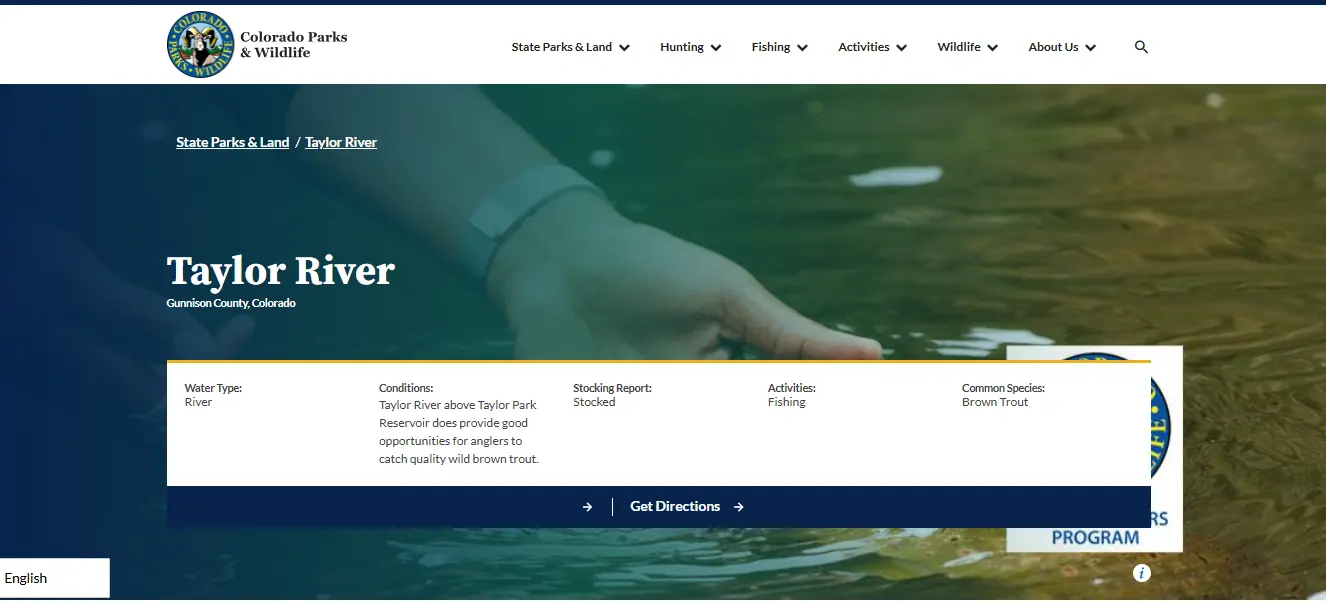
Use for CPW Taylor River description, stocking status, common species and upper-river context.
Use for SWA access requirements, Gunnison CPW contact, closure notes and map links.
Use for Taylor River campground access, seasons, directions and public-land context.
Use for current fishing regulation resources before keeping fish or choosing tackle.
Use to buy the correct Colorado fishing license, SWA pass or required stamp before fishing.
Use as a close-intent internal guide for another Colorado flow-based trout report.
Taylor River Colorado Fishing Report FAQs
Which USGS gage should I use for the Taylor River fishing report?
Use USGS 09109000 below Taylor Park Reservoir for tailwater planning and USGS 09110000 at Almont for lower Taylor River discharge, gage height and water-temperature context.
Is the Taylor River below Taylor Dam open to fishing?
Not all of it. CPW Taylor River SWA restrictions list the area from Taylor Dam to 325 yards downstream as closed. Fish only legal posted water.
What are the Taylor River tailwater rules?
The special reach beginning 325 yards below Taylor Dam downstream to the lower Taylor River SWA boundary is listed as artificial flies and lures only, with all trout returned immediately. Verify current CPW rules first.
Do I need a Colorado fishing license for Taylor River?
Yes, most anglers age 16 and older need a valid Colorado fishing license. At Taylor River SWA, age 16+ visitors also need a valid hunting/fishing license or SWA pass for access.
What fish are in the Taylor River?
CPW lists brown trout as a common species on the Taylor River page and notes quality wild brown trout opportunity above Taylor Park Reservoir.
Is the Taylor River stocked?
CPW marks the Taylor River page with stocked status. Use CPW’s live stocking and Fishing Atlas tools for current details before planning from stocking information.
Where is good access for the Taylor River?
Taylor River SWA and USFS access areas such as Rosy Lane are key planning points. Always verify public access, parking and private-property boundaries before fishing.
When is the best season to fish the Taylor River?
Stable tailwater flows can fish well in multiple seasons, spring runoff can affect safety and clarity, summer brings pressure and temperature concerns, and fall can be productive if anglers respect spawning fish.
Can I keep trout on the Taylor River?
It depends on the exact section. The famous special reach below Taylor Dam requires all trout to be returned immediately. Check current CPW regulations for the exact water you fish.
Is the screenshot in this guide official proof?
No. The screenshot is a user-help visual reference only. Always use the live official USGS and CPW pages for current flows, rules, closures and access requirements.
Independent Guide Disclaimer
This guide is built to help anglers plan a Taylor River fishing trip, but it is not an official USGS, Colorado Parks and Wildlife or U.S. Forest Service page.