Upper Colorado Fishing Report: Flows, Access & Trout Tips
The Upper Colorado near Kremmling, Pumphouse, Radium and State Bridge can be excellent trout water, but the trip depends on flow, clarity, water temperature, public access and safe float or wade decisions.
This guide gives you a practical workflow: check the USGS Kremmling gage, choose a BLM access point, understand CPW trout rules, then decide whether to wade, float or choose a backup water.
Last reviewed: June 25, 2026. Always verify live flows, weather, public/private boundaries, CPW rules and BLM site status before fishing.
Quick Answer: How Should You Read the Upper Colorado Fishing Report?
Start with the USGS Colorado River near Kremmling gage, then check BLM access, then confirm CPW rules for the stretch you plan to fish. Do not make a float or wade decision from a generic fishing report alone.
For this page, “Upper Colorado” means the popular Colorado River corridor around Kremmling, Pumphouse, Radium, Powers access and State Bridge-style trip planning.
Flow first
Check discharge, gage height, water temperature and turbidity. The trend matters more than a single number.
Access second
Use BLM Pumphouse, Powers and Upper Colorado pages. Public and private land can be tightly mixed in this corridor.
Rules third
CPW lists Colorado River trout rules by section. Always match the rule to your exact stretch before keeping fish.
Official Flow Screenshot: USGS Upper Colorado River Conditions Page
This screenshot is placed near the start so readers can recognize the official USGS water-data page before checking live river conditions.
Watch First: Upper Colorado River Float & Fishing Visual Guide
This local video is included early because it helps readers understand the character of the Upper Colorado River corridor before planning access, wading or a float trip. Use it for visual context only.
Upper Colorado River Flows: How to Check Conditions Before Fishing
The USGS Colorado River near Kremmling gage is the core flow check for this fishing report. It shows data such as discharge, gage height, water temperature, precipitation, turbidity and other water-quality readings.
Do not obsess over one number. A stable river, a falling river, a rising muddy river and a warm low river all fish differently.
| USGS Field | What It Tells You | Practical Fishing Move |
|---|---|---|
| Discharge / CFS | How much water is moving through the river. | Use it to decide wading safety, float viability and where trout may hold. |
| Gage height | River stage at the gage. | Compare it with your own safe-wading history instead of treating it as a universal rule. |
| Water temperature | How warm or cold the river is. | Cold water can slow fish; warm water can stress trout and make early fishing smarter. |
| Turbidity / clarity signal | Whether the river may be dirty or sediment-heavy. | Dirty water can push fish tight to banks and soft edges, but it can also make wading riskier. |
| Recent trend | Whether the river is rising, falling or stable. | Stable or slowly falling flows are easier to plan around than sudden spikes. |
4-Step Flow Reading Method
Open the Kremmling gage
Use the official USGS Colorado River near Kremmling page before choosing Pumphouse, Powers, Radium or State Bridge-style plans.
Check discharge and gage height together
CFS tells volume; gage height helps show stage. Together they give a better safety picture.
Look at water temperature
In summer, warm water can make early morning fishing and fast trout handling more important.
Match conditions to method
Low and clear may favor stealthy wade tactics. Bigger stable water may favor floating. Dirty or spiking water may call for a backup plan.
Open the official USGS Colorado River near Kremmling gage before your trip.
Upper Colorado Access: Pumphouse, Powers, Radium & Public Land Reality
Access is the second part of the report. The fish may be active, but if you choose the wrong access point or cross private land, the trip becomes a problem.
| Access Area | Best Use | Before You Go |
|---|---|---|
| Pumphouse Recreation Area | Major BLM hub for developed camping, river access, boat ramps and Upper Colorado float planning. | Check site status, camping, day-use parking, ramp use, toilet availability and crowd pressure. |
| Powers Fishing Access | Small BLM access between Kremmling and Parshall with parking and Colorado River access. | BLM warns public lands are highly intermixed with private land here. Know boundaries before walking. |
| Radium corridor | Popular float and canyon-style planning area. | Check flow, shuttle, road, ramp and weather before assuming it is an easy day. |
| State Bridge / lower float planning | Float-trip context and downstream access planning. | Confirm take-out, shuttle, private-property edges and current river level. |
| Colorado River Road / public parcels | Scouting, wade pockets and float logistics depending on location. | Use official maps and posted signs. Do not guess from a pullout alone. |
Start with the BLM Upper Colorado River Recreation Area page, the BLM Pumphouse Recreation Area page and the BLM Powers Fishing Access page.
CPW Colorado River Rules: Do Not Use a Generic Trout Rule
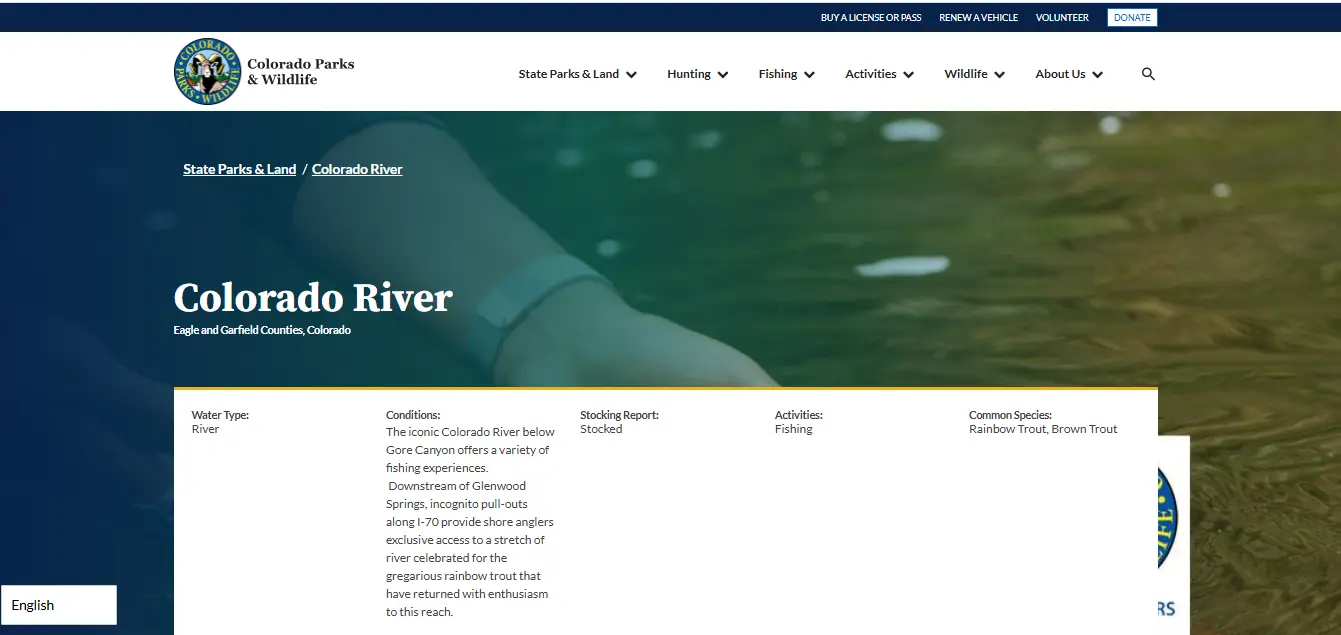
CPW lists the Colorado River as a river fishery with rainbow trout and brown trout. It also lists special regulation language for the Rock Creek downstream to Silt Boat Ramp area, including trout limits and seasonal closure areas around named creek confluences.
| Rule Area | CPW Context | Plain-English Move |
|---|---|---|
| Colorado River species | CPW lists rainbow trout and brown trout as common species. | Build the report around trout tactics, but check for exact section rules before keeping fish. |
| Rock Creek to Silt Boat Ramp | CPW lists a two-trout bag and possession limit in the described regulation section. | If fishing downstream of the Upper Colorado corridor, check this rule carefully. |
| Creek confluence buffers | CPW lists special closure windows around Canyon, Elk, Grizzly and No Name Creek confluences in that described section. | Do not fish confluence areas from memory. Verify closure dates and distance buffers first. |
| Warmwater species | CPW lists no bag or possession limit for several warmwater species in the described section. | Do not confuse warmwater species rules with trout rules. |
Verify final legal wording on the official CPW Colorado River page and CPW current fishing regulations.
Wade or Float? Upper Colorado Decision Table
The Upper Colorado can be both a float fishery and a wade fishery, but the right choice changes with flow, clarity, temperature, crowds and access.
| Condition | Usually Better | Why |
|---|---|---|
| Low, clear, stable flow | Wade or careful bank fishing | Fish can be spooky, but footing and line control may be easier. |
| Moderate stable flow | Float or mixed bank/wade plan | More water opens up, but safe wading still requires caution. |
| High or rising flow | Float only with experience, or choose another water | Pushy water makes wading risky and can reduce visibility. |
| Warm afternoon water | Early morning session | Trout stress increases with warmer water; early starts are often smarter. |
| Dirty water after storms | Edges, soft seams or backup water | Fish may move to softer edges, but unsafe visibility is a real issue. |
| Weekend crowd pressure | Start early or pick less obvious access | Pumphouse and major launches can get busy, especially in warm months. |
Upper Colorado Trout Tips That Actually Help
Most weak fishing reports stop at “nymphs and streamers.” The useful version starts with water behavior, pressure, temperature and where fish can hold safely.
Start early in summer
Morning often gives cooler water, calmer wind and less launch traffic. It also reduces fish-handling stress.
Fish the soft edges
When water is bigger, trout often use inside seams, bank edges, buckets and slower cushions instead of the main push.
Match clarity
Clear water rewards stealth and smaller presentations. Stained water may call for more profile and slower edges.
Cover water wisely
Do not stand in one run all day if fish are not responding. Move with purpose and read current seams.
Download before leaving
Save your license proof, USGS gage, BLM access pages and map pins before service gets weak.
Clean gear
Clean, drain and dry boots, waders, nets, boats and anchors before moving to another Colorado water.
Season-by-Season Planning
| Season | What to Watch | Smart Move |
|---|---|---|
| Spring | Rising flows, runoff, cold water and changing clarity. | Check the gage trend often and avoid unsafe wading. |
| Early summer | Higher flows, float activity and improving bug windows. | Consider floating only if skill, flow and shuttle plan match. |
| Late summer | Warm afternoons, lower flows and more pressure. | Fish early, handle trout quickly and watch water temperature. |
| Fall | Cooler mornings, active browns and clearer conditions. | Use stealth, streamers or nymphs depending on clarity and flow. |
| Winter | Ice edges, cold water, access issues and slow fish. | Fish carefully, avoid shelf ice and focus on slow deeper lanes. |
Colorado Fishing License Reminder for the Upper Colorado
Most anglers age 16 or older need a valid Colorado fishing license before fishing the Upper Colorado. If your trip includes State Wildlife Areas, boat use, overnight camping or other access rules, those requirements are separate from the basic fishing license.
Need the license workflow?
Use the complete Colorado fishing license guide for CPW Shop steps, age rules, proof, Habitat Stamp, second-rod stamp and common buyer mistakes.
Compare another flow-based river?
If the Upper Colorado is high, warm, crowded or off-color, compare the flow-check workflow with another river report.
Grand County lake backup
If the river is blown out or unsafe to wade, a nearby lake-style trip may be a better plan.
More Colorado flow reports
For Front Range-style flow planning, compare how Clear Creek changes with runoff, traffic and canyon access.
Upper Colorado Problem Solver: What to Do When Conditions Are Bad
This section is for the morning-of-trip panic when the report looks confusing.
| Problem | Do This First | Do Not Do This |
|---|---|---|
| Flow is rising quickly | Delay wading, look for safer bank water or choose a lake/backup river. | Do not force a crossing because yesterday’s report said it was fishable. |
| Water is dirty | Check turbidity/clues, upstream weather and softer edges. | Do not wade blind if you cannot see footing. |
| Water is warm | Fish early, shorten the session and handle trout quickly. | Do not keep fishing stressed trout through hot afternoons. |
| Pumphouse is crowded | Start earlier, consider Powers, adjust float timing or pick a backup water. | Do not crowd another angler or block ramp/parking flow. |
| Access looks private | Leave it and use official BLM/CPW map information and posted public access. | Do not cross fences, yards, ranch roads or posted land. |
| You forgot license proof | Recover CPW proof before fishing. | Do not fish first and solve proof later. |
Common Upper Colorado Fishing Mistakes to Avoid
- Reading only a shop report: reports are useful, but official USGS flow data should come first.
- Ignoring water temperature: warm water can make trout handling and timing more important than fly selection.
- Assuming every pullout is public: BLM warns that public and private land can be highly intermixed around Powers access.
- Launching without a shuttle plan: float fishing needs a real put-in, take-out and transport plan.
- Wading pushy water: the Upper Colorado can be powerful even when it looks manageable from the bank.
- Confusing Colorado River sections: CPW rules can vary by stretch, especially farther downstream.
- Skipping gear cleaning: clean, drain and dry gear before moving between waters.
- Not saving pages offline: license proof, flow data, map pins and access pages should be saved before the canyon drive.
Official Links for Final Verification
Use these official pages before fishing. They are placed here so users know exactly what to verify.
Use for live discharge, gage height, water temperature, turbidity and recent flow trend.
Use for official recreation-area context, river corridor overview and public-land planning.
Use for developed camping, boat ramp, parking, toilet and river-access details.
Use for parking, location, public/private boundary warning and Kremmling Field Office contact.
Use for species, Colorado River description, Fishing Atlas link and special regulation context.
Use to buy the correct Colorado fishing license, stamp or pass before fishing.
Use for access, species, special regulations, stream gages and map-based planning.
Use to reach current brochures and legal rule resources before keeping fish.
Upper Colorado Fishing Report FAQs
Where should I check Upper Colorado River flows?
Use the official USGS Colorado River near Kremmling gage for this Upper Colorado corridor. Check discharge, gage height, water temperature, turbidity and the recent trend.
Is the Upper Colorado better for wading or floating?
It depends on flow, clarity, access and your skill level. Lower stable flows can suit wading, while moderate stable flows may suit floating. High or rising water can be unsafe for wading.
What fish are in the Colorado River in Colorado?
CPW lists rainbow trout and brown trout as common species for the Colorado River page. Local sections can also have other species, so verify the exact reach you fish.
Do I need a Colorado fishing license for the Upper Colorado?
Yes, most anglers age 16 or older need a valid Colorado fishing license before fishing the Upper Colorado River.
Is Pumphouse a good Upper Colorado access point?
Yes. BLM lists Pumphouse as part of the Upper Colorado River SRMA with developed camping, river access, boat ramps, parking and vault toilets.
What should I know about Powers Fishing Access?
Powers is a small BLM access point between Kremmling and Parshall. BLM warns that public lands and private land are highly intermixed, so anglers must respect boundaries.
Can I use any pullout to fish the Upper Colorado?
No. Use signed public access, BLM pages, CPW tools and posted signs. A fishing license does not allow crossing private land.
What does turbidity mean for fishing?
Turbidity is a clue about water clarity. Higher sediment or dirty water can reduce visibility, change trout location and make wading riskier.
When is the best time to fish the Upper Colorado in summer?
Early morning is often the smartest starting window because water can be cooler, wind can be lighter and access points may be less crowded.
Is this page an official fishing report?
No. This is an independent planning guide. Use official USGS, BLM and CPW pages for live data, access status and legal regulations.
Independent Guide Disclaimer
This guide is built to help anglers make better Upper Colorado River decisions, but it is not an official USGS, BLM, Colorado Parks and Wildlife or State of Colorado page.